New Orleans in October 2026: A Smart First-Timer’s Guide to Crescent City Blues & BBQ Festival Weekend
If you want a New Orleans trip with strong food, live music, and slightly easier weather than summer, October is one of the smartest times to go. For 2026, there is an especially useful planning anchor: the Crescent City Blues & BBQ Festival runs from October 9 to October 11 at Lafayette Square in downtown New Orleans, and admission is free. That makes it an ideal long-weekend framework for first-time visitors who want a trip that feels lively without needing a complicated, ticket-heavy itinerary.
This guide is built for travelers who want to see New Orleans well in three days: not by racing across the city, but by choosing the right neighborhood, understanding how the weekend flows, and leaving room for the city’s best habit, which is rewarding unplanned stops.
Why this is a strong October trip
The Crescent City Blues & BBQ Festival is scheduled for October 9–11, 2026, in Lafayette Square in the Central Business District. The official tourism listing describes it as a free festival with music stages, BBQ vendors, and an art market, which gives visitors a rare New Orleans weekend where the core event is easy to access and does not require a high-cost ticket commitment.
That location matters. Lafayette Square sits downtown, close to hotels in the Central Business District and within easy reach of the French Quarter, Warehouse District, and St. Charles Avenue corridor. For first-timers, that means less time figuring out rides and more time actually enjoying the city.
Where to stay for the easiest trip
Best area: Central Business District
If this is your first New Orleans visit, the Central Business District is the most practical base for this specific weekend. You can walk to the festival, reach the French Quarter quickly, and use the St. Charles streetcar corridor for sightseeing. It is often the best compromise between convenience and breathing room.
Also good: Warehouse District
If you like museums, restaurants, and a slightly calmer evening feel, the nearby Warehouse District works well too. It still keeps you close to Lafayette Square and downtown transit.
Fine, but less efficient: deep French Quarter stays
The French Quarter is iconic and many first-time visitors understandably want to stay there. It can be fun, especially if nightlife is a priority, but for this particular weekend it is not always the easiest option if you want quick festival access plus a better chance of sleeping well.
One practical move is to map your hotel against the festival before booking, then sketch your walking times and must-do stops in one place. This is the kind of trip where an app like Tripcito is genuinely useful, especially if you want to organize reservations, saved places, and a realistic hourly plan instead of a loose notes app list.
How to get around
From the airport
Louis Armstrong New Orleans International Airport is the main airport for the city. Public transit riders should know that New Orleans Regional Transit has an Airport Express route in its network materials, though many visitors will still choose a rideshare or taxi for the simplest arrival, especially if landing at night or carrying luggage.
In the city
For a first trip, New Orleans is best handled by mixing walking with selective transit or short rideshares. Around this weekend, your main zones are likely to be the Central Business District, French Quarter, Frenchmen Street, and the Garden District or St. Charles corridor.
Do not overpack the schedule with cross-city jumps. New Orleans looks compact on a map, but heat, crowds, music stops, and long meals have a way of stretching the day in a good way.
A smart 3-day plan for October 9–11, 2026
Day 1: Arrive, settle in, and ease into downtown
Check in, get your bearings, and keep the first day light. Start with a walk through the Central Business District and down toward the French Quarter. If energy allows, continue to Jackson Square and the riverfront, then have an early dinner nearby.
The goal on night one is not to do everything. It is to get acclimated, hear some live music, and avoid the classic first-timer mistake of staying out too late before a full weekend.
Day 2: Festival time plus the French Quarter
Use the morning for a proper breakfast and a slow start, then head to Lafayette Square for the Crescent City Blues & BBQ Festival. Because admission is free, you can treat the festival as a flexible anchor rather than an all-day obligation. Stay for music, sample food, then take a break when the crowds or weather start to feel heavy.
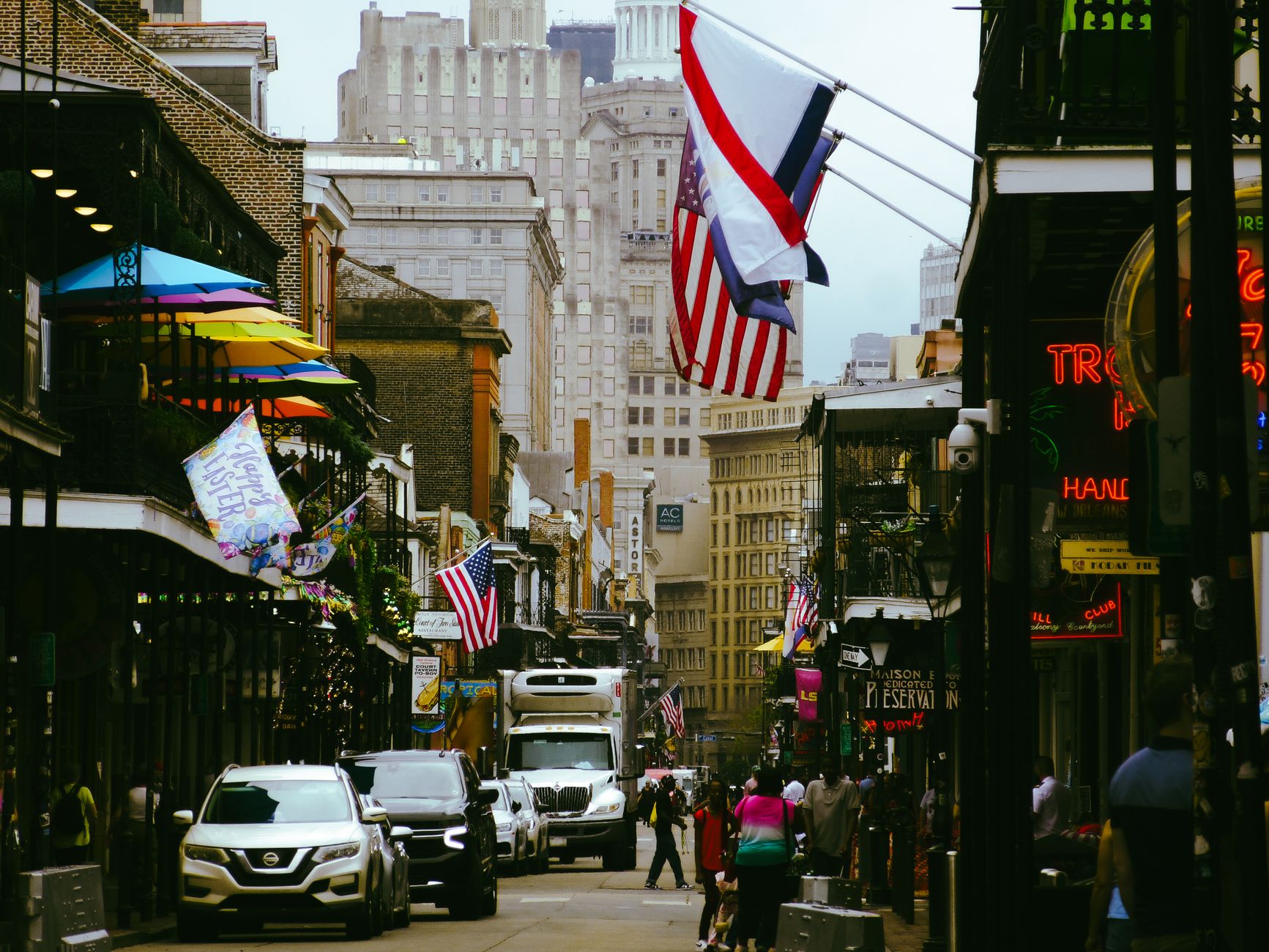
Later in the afternoon, walk or ride into the French Quarter. This is a good window for seeing the neighborhood while still keeping the evening open. If you want nightlife, save your latest hours for Frenchmen Street rather than trying to force a packed Bourbon Street marathon unless that is specifically your goal.
Day 3: One classic neighborhood beyond downtown
Before leaving, choose one area outside your main core. For many first-time visitors, that should be the Garden District and St. Charles Avenue. The avenue is one of the city’s signature corridors and is specifically tied to major events throughout the year, including the Blues & BBQ Festival area downtown. It gives you a broader sense of New Orleans than staying only in the Quarter.
If your flight is later, return to the festival for one more pass or fit in a museum stop in the Warehouse District. Keep the final day intentionally lighter than you think you need. New Orleans rewards margin.
What to prioritize if it’s your first time
1. Music in more than one setting
The festival gives you a structured live-music experience, but you should also hear music in a club or neighborhood venue. The contrast is part of understanding the city.
2. One iconic area and one less-obvious one
Yes, see the French Quarter. But also make time for downtown, the Warehouse District, or the Garden District so the trip does not collapse into one crowded slice of the city.
3. Meals with breathing room
Do not schedule every meal tightly. In New Orleans, a lunch can become a lingering event, and that is often the better outcome.
Common planning mistakes to avoid
Trying to cover too much ground
Three good neighborhoods are enough for a long weekend. Five is usually too many.
Booking far from your weekend anchor
For this trip, staying near downtown makes the whole weekend easier. Saving a little on a far-flung hotel can cost you time and energy later.
Ignoring how useful a real itinerary can be
New Orleans is spontaneous, but that does not mean disorganized is better. A loose but structured plan helps you leave room for the right detours. If you are traveling with friends, Tripcito is handy for keeping everyone on the same version of the schedule, especially when meals, music stops, and hotel details start to scatter across group chats.
Who this trip is best for
This October weekend works especially well for first-time visitors who care about food and music more than checking off every attraction. It is also a strong choice for couples, friend groups, and solo travelers who want a social city break without needing to commit to an expensive headliner event.
The festival’s free entry makes the trip more flexible than many event weekends. You can build around it, dip in and out, and still shape the rest of the weekend around your own pace.
Final planning take
If you have been waiting for a good first New Orleans window, October 9–11, 2026 is an easy one to justify. The Crescent City Blues & BBQ Festival gives you a built-in reason to go, Lafayette Square gives the weekend a convenient center, and the city around it is rich enough that you do not need to overcomplicate the plan.
Keep your hotel central, avoid overscheduling, and give yourself one organized home for bookings, saved spots, and timing. Even a short trip runs more smoothly when everything is in one place, which is where Tripcito can be useful without taking over the experience. In New Orleans, good planning is not about controlling the trip. It is about making sure you are free enough to enjoy it.
See latest blog posts:
• Philadelphia This Weekend: How to Plan a Smart Fall City Break Around YèShì Chinatown Night Market
• Savannah in October: A Smart 3-Day Itinerary for Squares, Riverfront Walks, and Fall Events
• Philadelphia Indigenous Peoples Day Weekend 2026: A Practical 3-Day Guide for First-Time Visitors
• San Francisco Fleet Week 2026: A First-Timer’s Practical Guide to the Air Show, Ship Tours, and a Smart October Weekend
• Philadelphia in October: A Smart 3-Day Weekend Guide for Food, Fall Festivals, and Historic Neighborhoods